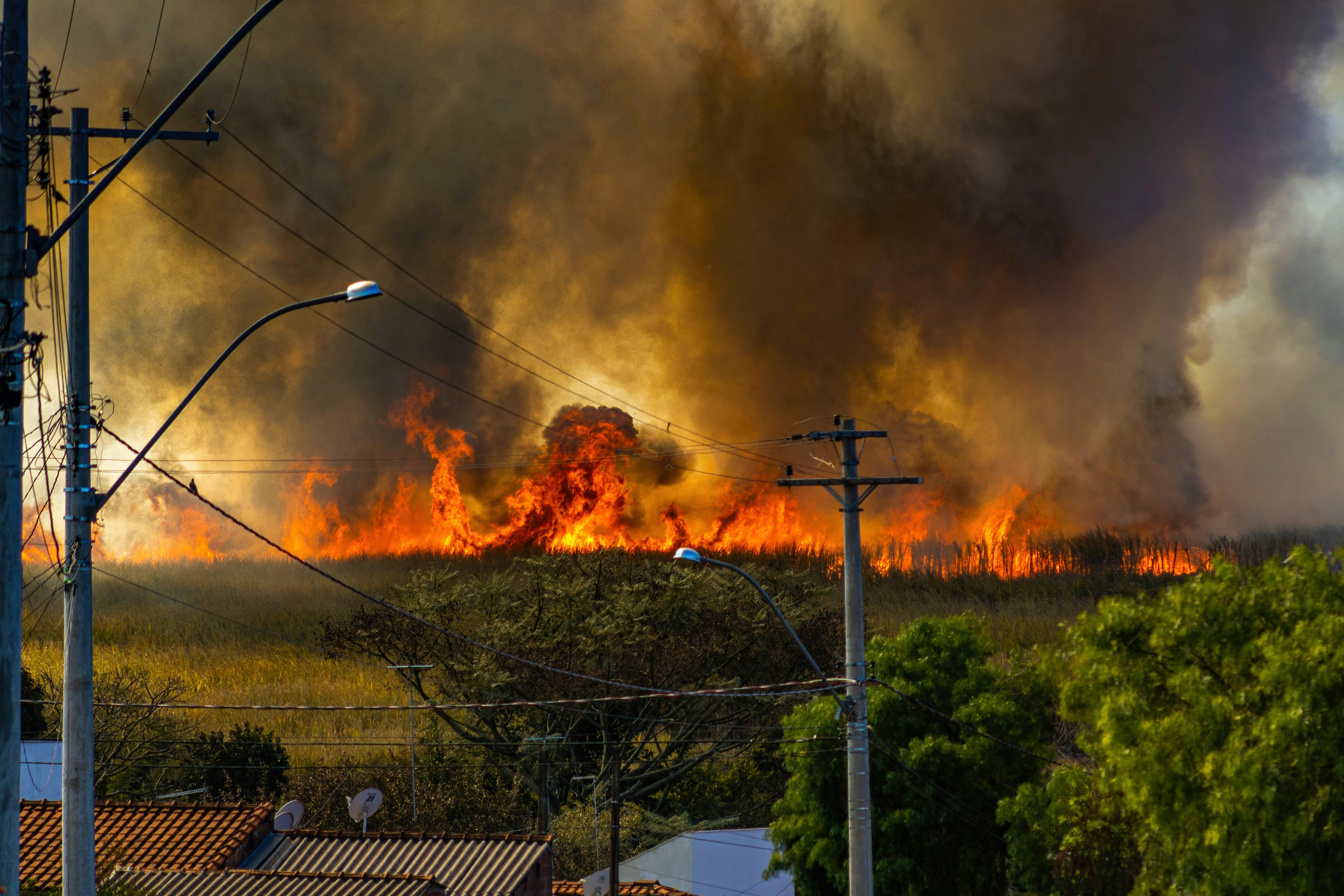
A fast-moving wildfire erupted in Malibu, California, forcing families to evacuate their homes as powerful Santa Ana winds threatened to spread the flames.
The Bryson Fire broke out on October 15 near Encinal Canyon Road, burning through dry vegetation in the Santa Monica Mountains.
By the following morning, the fire had burned approximately 146 acres, and firefighters had contained just 17% of it, according to Los Angeles County officials.
Families weren't the only ones who needed somewhere safe to go.
Residents with horses, livestock, and other animals were urged to evacuate early. Emergency shelters opened for displaced families, while separate facilities were made available for pets and larger animals.
Schools closed, roads were restricted, and some neighborhoods faced power shutoffs as firefighters worked to prevent the blaze from reaching homes.
What about families living outside the fire zone?
Even when flames don't reach a neighborhood, wildfire smoke can become a serious concern.
Smoke contains fine particles known as PM2.5, which can travel considerable distances and enter homes through windows, doors, and ventilation systems.
These tiny particles can aggravate asthma and other respiratory conditions, particularly among children, older adults, and people with existing health problems.
For households affected by wildfire smoke, a properly sized HEPA air purifier can help reduce indoor particle concentrations. Monitoring local air-quality reports can also help families decide when to limit outdoor activities.
Learn more about protecting indoor air quality at Atmos Protect.
A close call for Malibu
Fortunately, firefighters prevented the Bryson Fire from destroying homes.
By October 17, evacuation orders had been lifted, with no reported structural losses. CAL FIRE confirmed that the blaze was fully contained on October 19.
For families who had to pack their belongings and move their animals to safety, the incident was a frightening reminder of how quickly a wildfire can disrupt an entire community.